Veneers – Haverhill, MA
Enhance Your Appearance by Hiding Dental Flaws

Imperfections in your teeth can make you feel so self-conscious about your grin that you try to remain tight-lipped or avoid spending time with others for fear of being judged. Thankfully, our team in Haverhill can enhance your appearance by hiding dental flaws with veneers.
This popular cosmetic service can be a versatile way to address one or more aesthetic concerns to boost your confidence. Continue reading to learn more about veneers to help decide if they’re right for you!
Why Choose Bradford Dental Care for Veneers?
- Dentists with 30+ Years of Experience
- Digital Impressions for Enhanced Accuracy
- Customizable, Tooth-Colored Materials
What Are Dental Veneers?
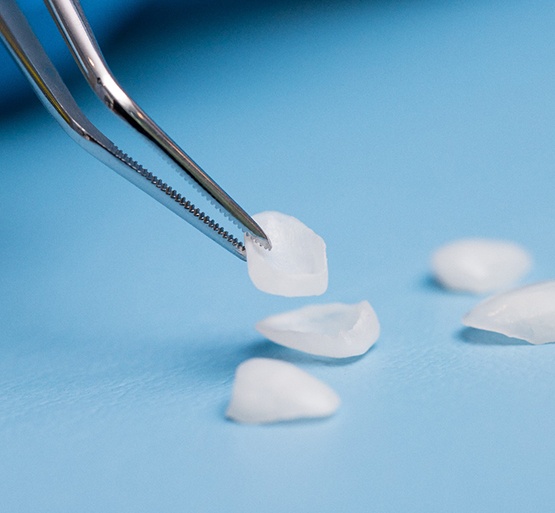
Veneers are thin shells that are typically made from resilient, tooth-colored porcelain. They’re customized to match or improve the size, color, and shape of your natural enamel, then are cemented to the fronts of your teeth to cover imperfections.
These restorations can effectively address a single issue or multiple concerns simultaneously, such as:
- Chips and cracks
- Stubborn dental stains
- Slight overcrowding
- Mild gaps
- Somewhat worn-down or misshapen teeth
The Process of Getting Veneers
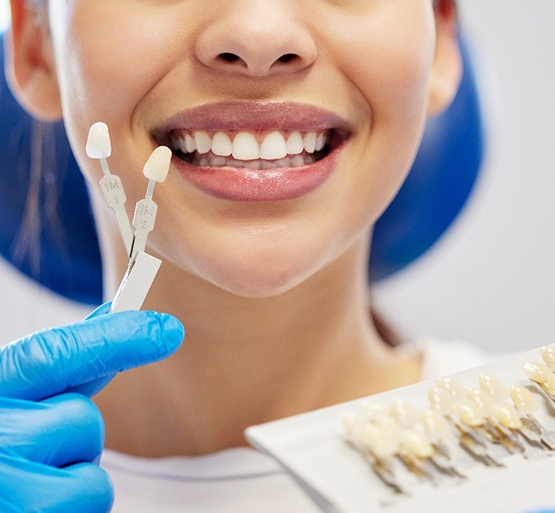
The first step to being fitted with veneers is to consult one of our providers to ensure you’re a good candidate. Our team will examine your mouth and treat any issues we find, such as cavities or gum disease, that could negatively impact the results. Then, once we determine this option is right for you, we’ll need to remove a small amount of enamel from the affected teeth, so the prosthetics fit correctly without looking awkward or contributing to a bite misalignment.
Next, we will make a comfortable, mess-free digital impression of your teeth and gums that will be sent to a special dental laboratory, which uses the information to design your one-of-a-kind restorations. We will likely recommend placing temporary veneers to safeguard your smile until the permanent ones arrive and can be cemented in place.
The Benefits of Veneers

Veneers continue to gain popularity as an effective cosmetic treatment due to their many benefits, such as:
- Improved self-esteem. They’re customized to match your smile for beautiful, lifelike results that boost your confidence.
- Easy dental hygiene. There aren’t any special accessories or instructions required to clean them; you can continue brushing and flossing your teeth twice daily as usual.
- Resilient materials. The durable ceramic used for these shells resists chipping, cracking, and staining and can help protect the underlying teeth.
- Versatile solution. Our team can arrange these prosthetics to hide one or multiple aesthetic concerns with a single treatment.
- Long-lasting results. They can last 15+ years with the right care, making them an excellent long-term investment.
Understanding the Cost of Veneers

Our office in Haverhill is in-network with Delta Dental, and we happily accept all PPO insurance plans. But most policies don’t cover the cost of aesthetic services meant to improve your looks more than your oral health, including veneers. With that said, there may be exceptions, such as if the shells are deemed medically necessary to protect your grin, so it’s worth checking your information to verify what’s included.
However, our compassionate team also understands that not everyone carries a policy, and we don’t want your current financial situation to prevent you from achieving the perfectly beautiful smile you’ve always dreamed of. That’s why we also gladly accept flexible payments through CareCredit or Cherry. If your application is approved, these low- to no-interest plans allow you to divide your total invoice into more manageable installments that are paid over a designated period.
Veneer FAQs
Are Veneers Permanent?
Although veneers in Haverhill aren’t technically permanent since they’ll eventually need to be replaced, the procedure is considered irreversible. That’s because to ensure they fit your teeth properly, a small amount of enamel must be filed away, and enamel does not grow back.
For this reason, teeth which have been prepared this way will always need to be covered by either crowns or veneers.
What Happens to the Teeth Under Veneers?
Veneers themselves will not harm your teeth. Furthermore, only a minimal amount of enamel needs to be removed from each tooth and the bonding material used to attach them is completely safe. Because the enamel will be covered by the veneer, the procedure won’t increase your risk of cavities. You will, however, still need to brush and floss regularly to prevent tooth decay from developing underneath the restorations.
You can protect your teeth and veneers in Haverhill with the same oral hygiene practices, including brushing twice a day with a non-abrasive toothpaste and soft-bristled toothbrush, flossing daily, limiting the amount of sugar you consume, and visiting your dentist regularly for your preventive checkups and cleanings.
Is There Anything I Can’t Eat with Veneers?
When you’re wearing temporary veneers in Haverhill in the weeks before your permanent ones are created, you should avoid hard foods like ice cubes, raw fruits and vegetables, and hard candies that could break them. You should also avoid any sticky foods that could pull them off your teeth.
Temporary veneers also stain more easily, so be careful when consuming darkly pigmented foods and beverages.
You are free to enjoy most foods again once your permanent veneers are in place but be careful with foods that are extremely hard or crunchy, as well as any dark beverages that could cause stains.
If you are experiencing temporary tooth sensitivity after your veneers in Haverhill are placed, avoid eating anything that is too hot or cold.
Also, be sure to drink alcohol sparingly, as it can weaken the bonding material used to hold your veneers in place.
Do Veneers Give You a Lisp?
It is not uncommon for some people to have difficulty pronouncing certain words when they first get veneers in Haverhill, resulting in a temporary lisp. This is partially due to muscle memory. Because your tongue isn’t used to accounting for the presence of veneers, the tiny difference in thickness can affect the way it moves. This typically results in difficulties when pronouncing the “s” and “v” sounds.
Your tongue will eventually adjust on its own, but practicing the pronunciation of certain sounds can make a big difference.
In some cases, your dentist may need to slightly reduce the thickness of your veneers in certain areas to make the lisp go away.