
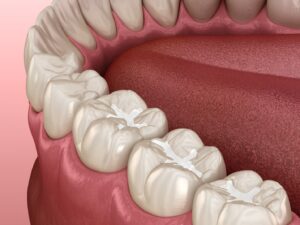
If you need a dental filling, you may have a choice between tooth-colored composite resin and traditional amalgam. Both materials can be used to repair teeth affected by cavities, but tooth-colored fillings have become increasingly popular because they offer several cosmetic and practical advantages. Read all about them below!
1. Discretion
Tooth-colored fillings are made up of composite resin, a material that can be matched to the shade of the rest of your natural teeth. The result? A uniform, seamless smile blended together perfectly.
On the other hand, amalgam fillings are typically made of a mixture of metals, the majority being liquid mercury. This gives them a silver-gray appearance that stands out when you smile, laugh, or talk. For fillings in visible areas of the mouth, a tooth-colored restoration can provide a more discreet result.
2. Preservation of Natural Tooth Structure
One of the primary goals of restorative dentistry is to preserve as much of your natural tooth structure as possible.
Unlike old-fashioned filling techniques that require a dentist to remove a larger portion of the tooth, composite resin can be directly bonded to it. Through this newer process, it’s much easier to remove only the decay, strengthening the connection between the filling and surrounding, remaining tooth.
3. More Than Just Cavity Repair
Tooth-colored composite resin isn’t limited to treating cavities. In some situations, dentists can use bonding material to repair small chips, reshape teeth, or address minor cosmetic imperfections. If your tooth has decayed past the point that a filling can repair it, composite resin can also be utilized by CEREC technology to create what’s called a “same day” dental crown.
A brief explanation: some dental practices have the technology and machinery in-office to design and manufacture a restoration and place it all in a single office visit. Traditional crown treatment requires patients to have an impression taken of their mouth, wear a temporary cap on the affected tooth, and come back several weeks later after the lab returns the permanent restoration for your dentist to place it.
This versatility can be particularly appealing if you’re interested in improving your smile while addressing a small area of tooth damage. However, composite bonding isn’t appropriate for every cosmetic or structural concern.
4. Good for Patients Sensitive to Metals
As previously mentioned, amalgam fillings are a mix of metals, the most prominent being mercury. Scientific studies show that an abundance of mercury in the body can be harmful. If you need several cavities to be filled and choose amalgam, you could be putting yourself at risk.
Furthermore, the metals found in amalgam fillings are more sensitive to extreme temperatures than composite resin. If you often enjoy hot and cold foods and drinks, a tooth-colored filling is less susceptible to discomfort and sensitivity.
5. A Smile You Can Be Proud Of
For many patients, the biggest benefit is simply feeling more confident about their smile. Tooth-colored fillings can make it difficult for others to even tell that a tooth has been restored!
A natural-looking restoration can be especially appealing when treating teeth that are visible when you speak or smile. Your dentist can select a shade that closely complements the surrounding teeth.
Tooth-colored composite fillings offer several advantages, including a natural appearance, the potential to preserve healthy tooth structure, and versatility for certain repairs. If you need a filling, your dentist can help you choose a restoration that balances appearance, function, durability, and the long-term health of your tooth.
About the Practice
We understand that cavities are the most common oral health issue worldwide. Our job isn’t to judge you; it’s to help you solve your problem! That’s why we offer restorations including tooth-colored fillings, customized crowns, and CEREC same day crowns. For more information and booking, contact us online or call our Haverhill office at (978) 372-0600.